Trust and quality notes
- Last updated
- January 9, 2026
In today's fast-paced world, staying up-to-date with the latest information is crucial for professionals across all fields. Integrating real-time data with AI tools like ChatGPT is a game-changer, allowing you to access timely, relevant insights without delay. In this blog post, we’ll explore practical techniques for combining ChatGPT with real-time data and prompt-chaining to produce reliable and tailored outputs. You'll learn how to craft effective prompts, sidestep common pitfalls, and set up efficient workflows for dynamic information tasks. By leveraging these strategies, you can work smarter and faster, keeping you ahead in your industry.
Techniques to Access Real-Time Data in ChatGPT
Techniques to Access Real-Time Data in ChatGPT
Integrating real-time data into ChatGPT can significantly enhance its utility, offering more relevant and timely responses for various applications. Here’s how you can effectively access and use real-time data with ChatGPT:
Utilize APIs, Plugins, and External Databases
One of the most practical ways to equip ChatGPT with up-to-date information is by leveraging APIs, plugins, and external databases. By doing so, you can embed fresh data directly into your prompts. This approach allows you to tailor the AI's output using the latest information available.
For instance, if you're building a weather assistant, you could use a weather API to retrieve current conditions. Your prompt to ChatGPT might look something like this: "You are a weather assistant. Using this real-time weather API response for New York: {insert current weather data}, generate a short forecast suitable for outdoor event planning." This ensures that the forecast is accurate and specific to current conditions.
Similarly, to keep your team informed with the latest corporate developments, you could integrate a database that holds recent company news. By prompting ChatGPT with: "Fetch the latest company news from the provided database and summarize key updates for the internal newsletter," you enable it to create succinct summaries that are current and relevant.
Implement Retrieval-Augmented Generation (RAG) Pipelines
For those looking to delve into more advanced techniques, Retrieval-Augmented Generation (RAG) can be highly effective. RAG pipelines involve systematically fetching information from trusted, authoritative sources and using this data to inform ChatGPT’s responses. This approach helps ground the AI's output in real-world facts and figures, enhancing credibility and accuracy.
When setting up a RAG pipeline, ensure you have a robust system in place to query reliable data sources. This might involve configuring search algorithms or databases that can dynamically pull the most recent information. Once retrieved, this data can be used to craft prompts that direct ChatGPT to focus on specific details or updates, ensuring that the generated content is both informative and up-to-date.
Mistakes to Avoid
While integrating real-time data, it's crucial to avoid common pitfalls. Ensure that the data sources you choose are reliable and authoritative to prevent the dissemination of misinformation. Additionally, balance the volume of data being integrated; too much information can overwhelm the model and result in less coherent outputs.
By implementing these strategies, you can significantly enhance ChatGPT’s ability to provide timely, relevant information, making it a powerful tool in any professional setting. Whether you’re crafting weather forecasts or summarizing company news, these techniques ensure that your outputs remain fresh and valuable.
Effective Prompt Structures for Real-Time Data
Effective Prompt Structures for Real-Time Data
Incorporating real-time data into your interactions with ChatGPT can unlock numerous possibilities for professionals across various fields. To leverage this effectively, it's crucial to structure your prompts in a way that maximizes clarity and relevance. Here's how you can do that:
Key Points to Remember
-
Clearly Define the Role: Start your prompt by assigning a specific role to ChatGPT. This helps the AI understand the perspective and expertise it should assume. For example, you might say, "You are an expert financial analyst," which sets the context for the analysis.
-
Embed the Freshest Data: Include the most recent and relevant data within the prompt. This ensures that the AI bases its responses on current information, making them more actionable and accurate.
-
Specify Timestamp and Origin: Always mention the date and source of the data. This not only adds credibility to the output but also aids in maintaining transparency. For instance, "Using the following real-time stock data as of July 8, 2025," clarifies the time context of the analysis.
-
Use Templates with Placeholders: Creating a standard template with placeholders for dynamic data and expected outputs can streamline the process. This ensures consistency and makes it easier to update prompts with new information quickly.
-
Provide Format Guidance: Clearly specify how you want the information to be structured....Rick Spurgeon, a Principal Developer Advocate, Confluent, shared this prompt engineering approach on confluent.io with some killer prompt examples... Whether it's a summary, bullet points, or a specific word count, this helps guide the AI to deliver exactly what you need.
Examples
-
Financial Analysis:
- "You are an expert financial analyst. Using the following real-time stock data as of July 8, 2025: {insert data}, summarize today's market performance in three bullet points. Include the data source in your summary."
-
Public Health Update:
- "Based on the latest CDC COVID-19 update dated July 8, 2025: {insert press release}, write a 200-word summary highlighting key points for the general public."
Mistakes to Avoid
-
Vague Role Descriptions: Avoid starting your prompt without clear instructions on the role or perspective ChatGPT should take. A well-defined role helps tailor the response to your specific needs.
-
Missing Data Source Information: Forgetting to mention the origin of your data or its timestamp can lead to less credible and actionable results.
Advanced Techniques
-
Dynamic Data Integration: Use APIs or other automated systems to continuously feed real-time data into your prompt templates. This keeps your interactions with ChatGPT fresh and relevant without manual updates.
-
Scenario-Based Prompts: For more complex analyses, create scenarios using multiple data points. This can help simulate real-world decision-making processes and provide richer insights.
By adopting these strategies, you can effectively harness the power of ChatGPT to work with real-time data, making your professional tasks more efficient and insightful.
Prompt Chaining for Ongoing Accuracy and Dynamic Information
Prompt Chaining for Ongoing Accuracy and Dynamic Information
Incorporating real-time data into your use of ChatGPT can be greatly enhanced by employing prompt chaining. This technique helps maintain accuracy and keeps your information dynamic and up-to-date. Here's how to effectively use prompt chaining, complete with examples, common pitfalls to avoid, and advanced techniques to consider.
Establishing Multi-Step Workflows
The key to successful prompt chaining is creating multi-step workflows. Begin with an initial prompt to gather basic information.- Analytics Insight Editorial, a AI and Analytics Media, shared this prompt engineering approach on analyticsinsight.net last year with some killer prompt examples - Then, incorporate feedback and new data in subsequent prompts to refine and improve responses. This iterative process ensures that your interactions with ChatGPT remain relevant and accurate.
Example: Start by asking ChatGPT for an overview of current market trends based on the latest data. In the next step, introduce any new reports or updates and ask ChatGPT to refine its analysis. This will help maintain a current and relevant understanding of market conditions.
Advanced Techniques
-
Chain-of-Thought Reasoning: Encourage the model to break down complex information step by step. This approach is particularly useful when dealing with new or evolving data, allowing the model to consider each piece of information carefully before arriving at a conclusion.
-
Iterative Feedback Loop: After receiving an initial response, review it for accuracy and completeness. Introduce any corrections or additional information, then prompt the model again. This cycle of feedback and correction helps ensure continuous improvement and accuracy.
Leveraging Retrieval-Augmented Generation (RAG)
Use Retrieval-Augmented Generation to support ongoing updates and ensure the model has access to the most current information. This technique involves fetching real-time data as part of your prompt chain, grounding ChatGPT's responses in the latest available context.
Mistakes to Avoid
-
Overloading with Information: Resist the urge to cram too much data into a single prompt.Pathway Team, a LLM workflow platform authors, shared this prompt engineering approach on pathway.com with some killer prompt examples This can overwhelm the model and lead to less accurate responses. Instead, break information down into manageable chunks across multiple prompts.
-
Ignoring Feedback Cycles: Failing to incorporate feedback or corrections can lead to repeated inaccuracies. Always use insights from previous interactions to inform and improve future prompts.
By carefully structuring prompt chains and incorporating real-time data, you can enhance the accuracy and dynamism of your interactions with ChatGPT.Look, The Flock Editorial, a AI Industry Blog, shared this prompt engineering approach on theflock.com just this June with some killer prompt examples. This approach not only ensures that your information is current but also that your decisions are built on a robust understanding of evolving contexts.
Industry-Specific Prompting Challenges and Solutions
Industry-Specific Prompting Challenges and Solutions
When using ChatGPT with real-time data, each industry faces unique challenges that require tailored solutions to ensure the tool provides the most accurate and relevant information. Here's how to navigate some common industry-specific challenges:
Financial Services
Key Challenge: In the financial sector, there's a risk of generating outdated or misleading responses if prompts don't incorporate real-time market data and timestamps.
Solution: To tackle this, automate data retrieval so that every query pulls the latest data before formulating a response. Additionally, enforce the inclusion of both the source and date in every output. This approach not only increases accuracy but also builds trust by allowing users to verify the information easily.
Mistakes to Avoid: Avoid relying solely on static data or historical information in dynamic market conditions. This can lead to decisions based on obsolete information.
Advanced Techniques: Utilize API integrations to fetch live market data and integrate it into the prompt structure. This ensures that responses are always aligned with the current financial landscape.
Customer Support
Key Challenge: Consistency and accuracy tend to drop if customer support bots operate using static knowledge bases.
Solution: Integrate real-time policy and status feeds into active prompt chains. This means that whenever there’s an update in company policies or a change in product status, the bot automatically incorporates these changes into its responses, keeping interactions accurate and relevant.
Mistakes to Avoid: Don't overlook the importance of updating the knowledge base regularly. Static data can lead to misinformation and customer frustration.
Advanced Techniques: Implement a feedback loop where common queries and issues automatically trigger a review of the knowledge base, prompting updates as necessary.
Healthcare
Key Challenge: In healthcare, patient safety can be jeopardized if prompts rely on outdated data.
Solution: Design prompts to always clarify the freshness and source of data. Additionally, set up triggers that prompt re-evaluation and re-running of responses when new information becomes available. This helps maintain the reliability and safety of the information provided.
Mistakes to Avoid: Avoid using generic prompts that don't emphasize the timeliness of data, especially in critical health scenarios.
Advanced Techniques: Leverage electronic health records (EHR) integrations to access the latest patient data and medical guidelines, ensuring responses are both timely and patient-specific.
By addressing these industry-specific challenges with tailored solutions, professionals can use ChatGPT more effectively with real-time data, ensuring both accuracy and reliability across various applications.
Avoiding Common Prompting Pitfalls
Avoiding Common Prompting Pitfalls
When using ChatGPT with real-time data, it's crucial to avoid common pitfalls that can lead to inaccurate or misleading outputs. By being mindful of these mistakes and following best practices, you can ensure that your interactions with ChatGPT are both effective and reliable.
Mistakes to Avoid:
-
Omitting Current External Context: It's easy to forget that without the latest data, ChatGPT might provide outdated or even completely fabricated answers. Always retrieve and embed the most up-to-date information before prompting the model. For example, if you're asking for a stock market update, make sure you have the latest figures to reference in your query.
-
Neglecting to Specify Data’s Timestamp or Origin: When dealing with time-sensitive information, failing to specify when and where the data is from can lead to confusion about its validity. Always include details like the date, time, and source of the real-time data to maintain clarity and credibility in your responses.
-
Using Static Prompt Templates for Evolving Information Tasks: Static templates that worked well in the past might not suit new or changing situations. This can result in irrelevant or incorrect outputs. Tailor your prompting approach to the current context and the specifics of the information you're working with.
-
Failing to Provide Clear Instructions or Desired Output Format: Ambiguity in your prompt can lead to misinterpretation by the language model. Clearly define what you expect in terms of the response's structure or content to guide the model effectively.
Key Points to Remember:
-
Inject Fresh Data: Never rely on static or stale data. Always ensure you're using the freshest relevant context to guide ChatGPT.
-
Specify Details: Clearly indicate the date, time, and source of any real-time data you include. This helps maintain the integrity and trustworthiness of the information provided.
-
Validate Outputs: Regularly cross-check the model's responses against the latest authoritative sources. This practice helps mitigate the risk of hallucinations, where the model generates plausible-sounding but incorrect information.
By adopting these best practices, you can significantly enhance your ability to leverage ChatGPT for tasks involving real-time data, ensuring more accurate and contextually relevant interactions.
Ready-to-Use Prompt-Chain Template for how to use chatgpt with real-time data
Here's a prompt-chain template designed to guide users on how to integrate ChatGPT with real-time data. This template facilitates a structured conversation to extract insights from real-time data sources, such as APIs or external databases, which ChatGPT cannot access directly. The template includes instructions and examples for each step to ensure seamless implementation.
Introduction
This prompt-chain template is designed to help users leverage ChatGPT alongside real-time data sources. By following this sequence, users can simulate real-time data interactions and extract insightful responses from ChatGPT, despite its lack of direct data access. Customize the prompts with specific data inputs and questions relevant to your context. While this approach is powerful, remember that ChatGPT won't have direct access to the internet or external data sources.
Prompt-Chain Template
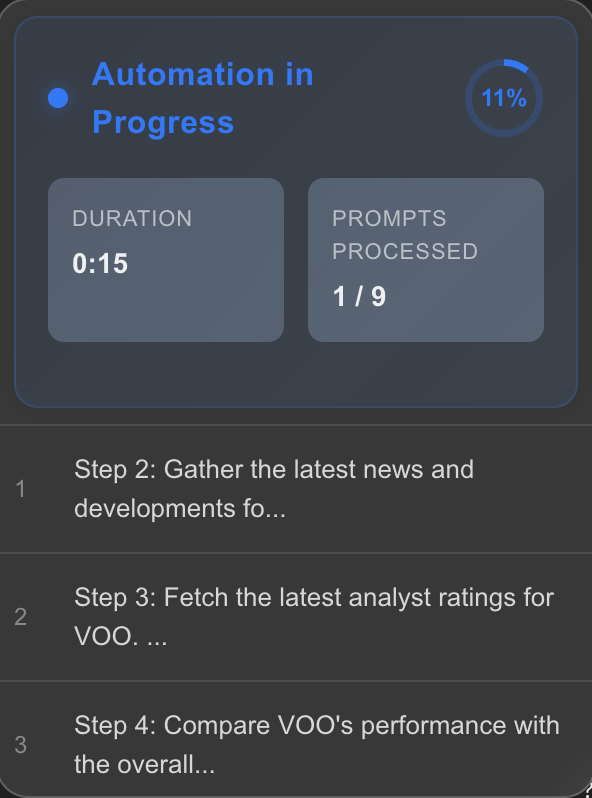
# System Prompt: Setting the Context system_prompt = """ You are an AI assistant helping users interpret real-time data. You do not have direct access to external data, so users will provide necessary context and data points. Your task is to offer insights and predictions based on the input data. """ # Why this works: This system prompt establishes the role of ChatGPT as an assistant that relies on user-provided data for analysis. # User Prompt 1: Providing Real-Time Data Context user_prompt_1 = """ Here is the latest data from [Data Source]: [Insert specific data points, e.g., "Stock prices for Company X: $150, $152, $149."] Based on this data, what are potential trends or patterns you notice? """ # Expected Output Example 1 # "Based on the provided stock prices, there seems to be a slight upward trend. This could indicate increasing investor confidence in Company X." # Why this works: This prompt introduces specific real-time data, allowing ChatGPT to analyze and identify trends based on the provided information. # User Prompt 2: Asking for Insights or Predictions user_prompt_2 = """ Given the previous trend analysis, what might be the implications for future performance or decision-making? """ # Expected Output Example 2 # "If the upward trend continues, it might be beneficial to consider investing in Company X. However, market conditions and external factors should also be considered." # Why this works: This prompt builds on the trend analysis, asking ChatGPT to extrapolate and provide actionable insights or predictions. # User Prompt 3: Requesting Further Analysis or Clarification user_prompt_3 = """ Can you suggest any additional data or factors that should be considered to improve the accuracy of your analysis? """ # Expected Output Example 3 # "To enhance the analysis, consider including data on market trends, competitor performance, and any recent news about Company X." # Why this works: This prompt encourages deeper analysis by identifying additional data points that could refine the insights provided. # Instructions for Connecting Prompts # 1. Begin with the system prompt to establish the context. # 2. Provide specific real-time data using User Prompt 1. # 3. Use the response from User Prompt 1 to inform User Prompt 2. # 4. Request further analysis using User Prompt 3, based on insights gathered.
Conclusion
This prompt-chain allows users to engage with ChatGPT effectively, simulating a real-time data analysis scenario. Customize the prompts by inserting relevant data and adjusting questions to suit your specific needs. Expected results include insightful analyses and actionable recommendations based on the provided data. Remember, the quality of input data significantly impacts the insights generated. Limitations include the model’s inability to access real-time data directly, requiring manual data updates.
In conclusion, by mastering the use of structured prompts, leveraging chaining techniques, and adhering to best practices for real-time data integration, professionals across various fields can unlock the full potential of ChatGPT. This approach transforms AI from a static resource into a dynamic partner capable of providing timely and precise insights. Whether you're in finance, healthcare, marketing, or any other industry, incorporating these strategies will enable ChatGPT to support your decision-making processes effectively.
AI agents, when utilized correctly, offer immense value by enhancing productivity, improving accuracy, and fostering innovation. They empower you to stay ahead in an ever-evolving market landscape by delivering up-to-date information that can inform strategic decisions.
We encourage you to take action by exploring these techniques in your everyday workflows.(Kodexo Labs Editorial, a Tech Industry Insights, shared this prompt engineering approach on kodexolabs.com with some killer prompt examples) Start small, experiment with different approaches, and soon you'll find that integrating ChatGPT with real-time data becomes an invaluable part of your toolkit. Embrace this opportunity to transform how you work and drive meaningful results with AI.